That conventional oriental sword stands a magnificent creation of artistry, but what if you wish for to exhibit your unique mode? Adapting your tool is a rewarding journey, allowing you to fashion a truly distinctive piece. From the haft wrapping and habaki to the shield design and hamon, each component offers a chance for personalization. This examination delves into the field of katana adjustments, providing facts for both beginners and proficient enthusiasts desiring to make their signature on the classical art of the samurai.
Entry-Level Original Fabrication
For people excited to embark on the advantageous journey of classical sword techniques , 1060 steel katanas extend an excellent entry point. This certain grade of basic steel obtains a perfect balance between expense and effectiveness . While lacking compared to hard as higher-end steels, 1060 permits a acceptable level of cutting preparation , making it suited for beginners to practice the core principles of edge management and embrace the refinement of expertly made Japanese weaponry. It’s a outstanding choice for building experience without the budgetary burden of more sophisticated steels.
T-10 Steel Blades : Achieving Capability and Economy
Supporting aficionados seeking an authentic saber experience without busting the monetary limit , T10 compound katanas represent a favorable option. These armaments offer a reasonable improvement in resilience compared to cheaper alternatives, exhibiting good edge retention and sufficient flexibility for rudimentary chopping techniques. While not rivaling the exceptional characteristics of higher-grade steels like T100 or folded steel , T10 provides a effective blend of capacity and reasonableness , making them a trendy choice for students and those on a restrained income .
Moving beyond the Cutting Surface : Tailoring Your Sword's Attachments and Grasp
Whereas the sharpened blade is undeniably the important point of a katana, truly improving its presence lies in the careful customization of its elements and hilt . This practice allows devotees to communicate their distinct character. Review the wide possibilities: menuki - decorative appliqués that offer visual focus; the hamon protective covers – often carefully engraved ; the tsuka center itself, wrapped in traditional ito rope ; and the fusa butt cap , which can be constructed from various elements like valuables or ivory .
- Select designs that connect with you.
- Assess with diverse composites .
- Focus on robustness for a long-term result .
The Attraction of the Katana: Legacy, Artistry, and Steelwork
An eastern saber possesses a exclusive allure, steeped in phases of the nation's history and folklore . More than merely a apparatus of combat , it's a mark of the samurai ethos – a fusion of expertise and command . Its unfolding spanned many generations, with early cutting instruments evolving into the slender curvature and lethal edge we identify today. The production involved is truly remarkable , requiring lifetimes of education to achieve . The process involves a multifaceted folding of steel bloom , creating layers that strengthen the edge’s flexibility and shaving ability. Different schools of metalworking originated , each with their distinctive secrets and practices for achieving the flawless balance and keenness - a truly demanding pursuit.
- First Katana classes
- The responsibility of the traditional blade in samurai culture
- Traditional forging techniques
Picking the Perfect Steel for Your Cutting Tool Project: 1060 vs. T10
Picking the proper steel is fundamentally important for any weapon project, and the judgment between 1060 and T10 can be tough. 1060 is a regular American fabrication, offering a respectable balance of robustness and persistence, facilitating it appropriately easy to manage. However, T10, a Far Eastern steel, habitually boasts heightened wear sustainability and can likely achieve a increased conclusive hardness, although it can be considerably troublesome to handle and requires precise heat refinement. Consider your qualification and expected benefits: for a rookie, 1060 may be a easier starting point, while the master smith might choose the improved features of T10.
- Convenience of Handling
- Longevity
- Terminal Tenacity
Accessing Excellence: Progressive Katana Alteration Approaches
Refining the technique of katana customization extends far beyond basic sharpening. Serious dedicated users are now probing advanced techniques to truly liberate a blade's hidden potential. This involves intricate work with the blade border, utilizing specialized compounds for differential hardening and carefully electing the shape of the crossguard to optimize balance and capability. Beyond purely functional alterations, artisans are increasingly focused on generating unparalleled aesthetic charm, through complex etching and layered films that truly transform a katana into a masterpiece.
Turning Raw Material into Excellence: Creating a 1060 Katana
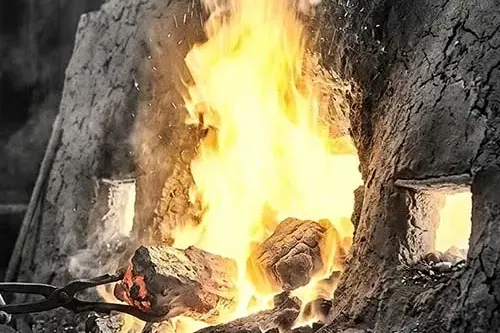
The journey embarks with typical 1060 substance, a hard material far from the sophisticated katana it will become . samurai sword Adept bladesmiths employ a elaborate process of uniting and crafting the primitive steel, repeatedly raising it and pressing it to eliminate impurities and establish a consistent grain structure. This exhausting process, often going on for months , builds the imperative strength and elasticity characteristic of a original Japanese blade . Extra heat refinements, including accurate hardening and conditioning , are indispensable to achieve the intended symmetry of sharpness, robustness and beauty .- Stacking: Lowers impurities and establishes grain structure.
- Shaping: Designs the steel into the initial blade form.
- Curing: Directs the final hardness and flexibility.
The Ongoing Allure of the Katana: Detailed Survey of Metal and Enhancement
Every traditional katana endures a potent symbol signifying Japanese style , its draw far extending beyond mere martial implements . Forged from distinctive steel and regularly featuring intricate ornaments , the way of creation itself is a celebrated art. Beyond the fundamental craftsmanship, the ability to personalize a katana - from the temper line to the hilt wrapping and guard - permits for a authentically individual manifestation for both devotees and handlers alike. This union of legacy steelwork and boundless personalization effectuates the katana's continued prestige across the terra .